


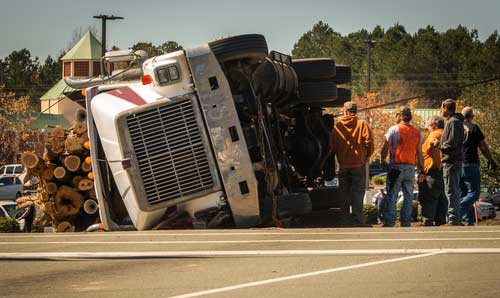
When does a truck accident claim in Georgia need to go to court?
A truck accident claim usually goes to court in Georgia when the insurance company refuses to make a fair settlement offer or liability, and damages are disputed. Most cases still settle before trial, but if a lawsuit is filed, Georgia’s general two-year filing deadline applies from the date of the crash.
Most truck accident claims in Georgia settle before trial. But settlement is not a given, and certain case factors make litigation far more likely. Disputed fault, catastrophic injuries, missing evidence, and unreasonable insurer conduct can all push cases from the negotiation table into a courtroom.
Understanding the truck accident lawsuit process helps you evaluate whether the attorney you hire is prepared to take your case to trial.
Key Takeaways for the Truck Accident Lawsuit Process in Georgia
- Georgia law under O.C.G.A. § 9-3-33 sets a two-year deadline to file a truck accident lawsuit, and missing that deadline eliminates the right to pursue compensation through the courts.
- A trucking accident settlement vs trial decision often depends on whether the insurance company disputes liability, denies the severity of injuries, or refuses to make a reasonable offer.
- Georgia’s modified comparative negligence rule under O.C.G.A. § 51-12-33 bars recovery if you are found 50% or more at fault, which makes disputed-liability cases more likely to go to trial.
- Federal trucking regulations under 49 CFR Part 395 govern hours-of-service records that often serve as key evidence in a truck accident court case.
What Triggers Litigation in a Georgia Truck Accident Case?

Litigation in a Georgia truck accident case is triggered when settlement negotiations fail, often due to disputed liability, catastrophic injuries, missing evidence, or unreasonable insurer conduct. A truck accident case moves toward court when the gap between the injured person’s losses and the insurer’s offer is too wide to bridge through negotiation alone.
Several specific circumstances make litigation more likely in Georgia trucking cases:
Disputed Liability Between Multiple Parties
Truck accident cases frequently involve more than two parties. The truck driver, the motor carrier, a maintenance contractor, a cargo loading company, and a vehicle manufacturer might all share fault. When multiple parties point fingers at each other, the insurer for each party has a financial incentive to minimize its own share of responsibility.
Georgia’s modified comparative negligence rule under O.C.G.A. § 51-12-33 makes these disputes especially high-stakes. A person injured in an accident may recover damages only if their share of fault is less than 50%. When multiple defendants argue that the injured person bears primary fault, a jury trial may be the only way to establish an accurate fault breakdown.
Catastrophic or Permanent Injuries
Truck accidents frequently produce traumatic brain injuries, spinal cord damage, amputations, and other life-altering harm. When lifetime medical costs, lost earning capacity, and pain and suffering push a claim’s value into six or seven figures, insurers become far less willing to settle quickly.
High-value claims receive more scrutiny from insurance adjusters. The insurer may dispute the connection between the crash and the injury, challenge the need for future medical treatment, or hire defense medical examiners to minimize the severity of the harm. These strategies can stall negotiations and may force litigation.
Missing or Destroyed Evidence
Trucking companies and their insurers control much of the evidence that matters most in a truck accident claim. Electronic logging device data, driver qualification files, vehicle inspection reports, and dispatch records all reside on the carrier’s systems.
Federal regulations under 49 CFR § 395.8 require motor carriers to retain hours-of-service records for only six months. If a preservation demand is not sent promptly, critical evidence may be deleted under routine retention policies.
When evidence gaps weaken the insurance company’s ability to evaluate fault, cases may stall in negotiations and move toward court.
Unreasonable Insurer Conduct During Negotiations
Insurance companies handling truck accident claims sometimes delay the process, undervalue injuries, or deny claims without reasonable justification. These tactics are not uncommon when the claim involves catastrophic injuries and high potential damages.
When the at-fault carrier’s insurer refuses to negotiate fairly, filing a lawsuit may be the most effective way to force movement.
Filing a truck accident lawsuit in Georgia triggers formal discovery. Discovery compels the trucking company and its insurer to produce internal documents, communications, and records that they might otherwise withhold during pre-suit negotiations. That transparency could change the settlement dynamic entirely.
How Does the Truck Accident Lawsuit Process Work in Georgia?

Filing a truck accident lawsuit in Georgia follows a structured timeline governed by state procedural rules and the two-year statute of limitations under O.C.G.A. § 9-3-33. The process involves several distinct phases.
Filing the Complaint and Serving the Defendants
The truck accident lawsuit process begins when the attorney files a complaint in the appropriate Georgia court. The complaint identifies the defendants, describes the collision, alleges the legal basis for liability, and states the damages claimed.
Each defendant must then be formally served with the complaint. In trucking cases, this often means serving the driver individually and serving the motor carrier through its registered agent. If additional parties, such as maintenance companies or cargo loaders, are involved, each requires separate service.
Discovery and Evidence Exchange
Discovery is the phase where both sides exchange evidence. In a truck accident court case, this phase is often where the strongest evidence surfaces.
Discovery in a trucking case typically involves several categories of evidence exchange that reveal what happened before and after the crash. These categories go beyond standard car accident claims because of the federal regulatory framework governing commercial carriers.
- Interrogatories and document requests compel the trucking company to produce driver logs, maintenance records, drug and alcohol testing results, and hiring records.
- Depositions place the truck driver, safety director, dispatcher, and other company representatives under oath to answer questions about the crash and their compliance with federal safety regulations.
- Accident reconstruction and electronic data from the truck’s event data recorder and ELD may reveal speed, braking patterns, and hours-of-service compliance at the time of the crash.
This evidence exchange could reveal regulatory violations or internal communications that were not available during pre-suit negotiations. Many truck accident cases settle during or shortly after discovery for this reason.
Mediation and Pre-Trial Settlement Conferences
Georgia courts frequently require mediation before a case reaches trial. Mediation places both sides in front of a neutral mediator who facilitates settlement discussions. The mediator does not make a binding decision but helps the parties identify common ground.
Mediation may succeed in truck accident cases because discovery has already exposed the strengths and weaknesses of each side’s position. It also eliminates the uncertainty and expense of going to trial.
Trial
If mediation fails, the case proceeds to trial. A Georgia truck accident trial typically involves jury selection, opening statements, witness testimony, cross-examination, expert testimony, closing arguments, and jury deliberation.
Truck accident trials are often more complex than other personal injury trials. Federal Motor Carrier Safety Administration regulations, electronic logging data, maintenance compliance records, and corporate safety policies all become part of the evidence presented to the jury.
A Georgia truck accident attorney who understands how to present this regulatory framework to a jury in plain language has a significant advantage at trial.
Ask Calvin Smith Law
Q: Will my truck accident case go to court or settle first?
A: Most Georgia truck accident cases settle before reaching a courtroom. However, settlement depends on the insurer’s willingness to offer fair compensation. When liability is disputed, injuries are catastrophic, or the insurer acts in bad faith, filing a lawsuit and proceeding toward trial may be the most effective path to a fair outcome.
Q: What happens if the trucking company destroys evidence before my lawyer gets involved?
A: Destruction of evidence after a crash may constitute spoliation, and Georgia courts may impose sanctions against a party that destroys relevant evidence. Depending on the situation, this may include allowing the jury to assume the missing evidence was unfavorable to the trucking company.
Q: Do I pay legal fees upfront for a truck accident lawsuit?
A: No. Calvin Smith Law handles truck accident cases on a contingency fee basis, meaning no fees are owed unless we recover compensation for you. This applies whether the case settles during negotiation, resolves in mediation, or goes all the way through trial.
Trucking Accident Settlement vs Trial: What Factors Affect the Decision?
The decision to settle or proceed to trial in a trucking accident case depends on the specific facts of each case, weighing the benefits of a predictable, faster resolution against the potential for higher compensation through litigation.
The primary factors influencing this decision include:
| Factor | Settlement May Be Stronger | Trial May Be Necessary |
|---|---|---|
| Liability | Fault is clear and largely undisputed | Multiple parties dispute who caused the crash |
| Injury documentation | Medical records thoroughly support the claimed injuries | The insurer challenges the severity or connection to the crash |
| Insurer conduct | The carrier’s insurer negotiates in good faith and makes reasonable offers | The insurer delays, undervalues injuries, or denies the claim without justification |
| Claim value | The settlement offer reflects the full scope of documented losses | The offer falls far below the documented value of the claim |
| Timeline | Faster resolution avoids extended litigation costs and stress | The additional time is justified by the gap between the offer and the actual losses |
| Predictability | Avoiding jury unpredictability is preferable when a fair offer is on the table | The strength of the evidence supports confidence in a favorable verdict |
A willingness to go to trial may also strengthen the settlement negotiation itself. Insurance companies track which attorneys actually try cases and which ones accept whatever is offered.
An attorney with a demonstrated record of taking trucking cases to verdict may have more leverage in every negotiation, even those that never reach a courtroom.
What Role Do Federal Trucking Regulations Play in a Truck Accident Court Case?
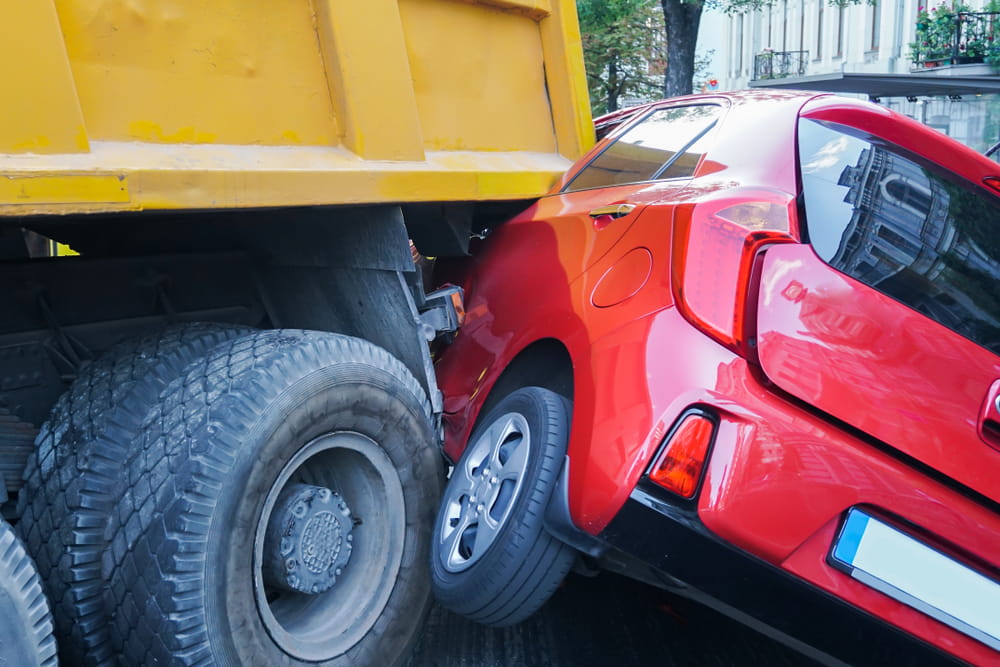
Federal Motor Carrier Safety Administration regulations set the safety standards that every commercial carrier and driver must follow. The Hours-of-Service regulations under 49 CFR Part 395 limit when and how long commercial motor vehicle drivers may drive, and these rules are based on scientific review designed to prevent fatigue-related crashes.
When a trucking company or driver violates these regulations, that violation may serve as evidence of negligence in a Georgia truck accident court case. Common regulatory violations that surface during litigation include the following.
- Hours-of-service violations occur when a driver exceeds the 11-hour driving limit or continues driving past the 14-hour on-duty window, both of which increase fatigue-related crash risk.
- ELD tampering or falsification involves altering electronic logging records to conceal driving time overages, which may indicate a pattern of safety disregard by the carrier.
- Maintenance failures documented through missing or incomplete vehicle inspection reports under 49 CFR Part 396 may reveal that known mechanical defects went unrepaired before the crash.
Presenting these violations to a jury in clear, accessible language is a critical part of any truck accident trial strategy. Jurors who understand that a trucking company ignored federal safety rules designed to protect everyone on the road are better positioned to hold that company accountable.
Truck Accident Lawsuit Process: Questions Answered by Our Georgia Attorneys
How do I know if my truck accident case is strong enough for court?
The strength of a truck accident case for trial depends on the quality of the evidence supporting liability and damages. Cases with clear regulatory violations, well-documented injuries, and strong causation evidence between the crash and the harm may perform better at trial.
What is the difference between a truck accident settlement and a verdict?
A truck accident settlement is an agreement reached between the parties outside of court. A verdict is a decision made by a jury after hearing evidence at trial. Settlements offer more control over the outcome and timeline. Verdicts carry more uncertainty but may result in higher compensation when the evidence strongly supports the plaintiff’s claim.
Does Georgia have damage caps in truck accident cases?
Georgia does not impose a statutory cap on compensatory damages in most personal injury cases, including truck accident claims. Punitive damages, however, are generally capped at $250,000 under O.C.G.A. § 51-12-5.1 unless the defendant acted with specific intent to harm or was under the influence of drugs or alcohol at the time of the crash.
What courts handle truck accident lawsuits in Georgia?
Truck accident lawsuits in Georgia are typically filed in the superior court of the county where the crash occurred or where the defendant resides. Cases involving interstate trucking companies may also be filed in or removed to federal court if diversity of citizenship and minimum damage thresholds are met.
Do I have to go to trial if I file a truck accident lawsuit?
No. Filing a truck accident lawsuit does not require going to trial. Many cases settle during the discovery phase or at mediation. Filing the lawsuit opens the door to formal evidence exchange, which often creates settlement opportunities that did not exist during pre-suit negotiations.
When the Insurance Offer Does Not Match the Damage, Call Calvin Smith Law

Deciding between a trucking accident settlement vs trial is one of the most important choices in any truck accident case. That decision requires an attorney who has been through the process, knows the courtroom, and prepares every case with trial in mind.
Calvin Smith Law takes truck accident cases across Georgia and brings over 30 years of combined experience to every claim. Our attorneys prepare for litigation from day one, because the insurance company’s offer often depends on whether they believe we are ready to walk into a courtroom.
Call our Atlanta office at (404) 842-0999 for a free consultation to discuss the truck accident lawsuit process and its implications for your case. No fees apply unless our Georgia trucking accident attorneys recover compensation for you.
Past results do not guarantee future outcomes.